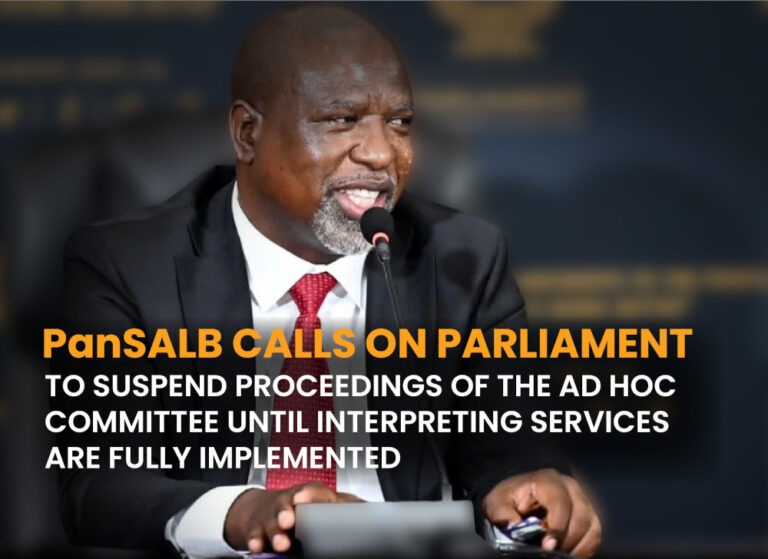
The Pan South African Language Board (PanSALB) calls on Parliament to uphold its constitutional obligations by strengthening linguistic inclusivity in the proceedings by the Ad Hoc Committee investigating allegations made by Lt Gen Nhlanhla Mkhwanazi. PanSALB has observed recurring challenges related to language use in the committee’s work. The right of witnesses and Members of Parliament to testify or participate in their mother tongue is a fundamental constitutional right enshrined in the Constitution of the Republic of South Africa. This right ensures parity of esteem for all official languages and their equitable use in public proceedings. Over 30 years into democracy, language access cannot be subject to negotiation or compromise. This right extends to the right of a language to exist in any setting in the Republic, including the right for languages to be used in the Ad Hoc committee proceedings. The absence of adequate interpreting services not only limits participation but compromises the accuracy, reliability, and evidentiary integrity of testimony that may inform parliamentary findings and outcomes. This practice further excludes a number of citizens from understanding and following these crucial investigative platforms on what affects their lives on daily basis.
The PanSALB Act (Act 59 of 1995, as amended) mandates the promotion and protection of all official languages. Furthermore, the full implementation of the South African Language Practitioners’ Council (SALPC), as established under the relevant legislation, is essential to professionalise language practice and safeguard public interest in multilingual service delivery.
Given Parliament’s role as the cornerstone of our democracy, the gravitas of this role warrants that it strictly upholds these Constitutional obligations. Therefore, on the basis of this, PanSALB recommends that the Parliament immediately implements the following practical measures for the committee to conduct its work without any disruption of proceedings:
- Prior consultation with all witnesses to establish their preferred language for testimony
- Provision of at least two qualified interpreters per session for each requested language, to maintain a smooth flow of proceedings.
- Provision of interpreting equipment for members of parliament to be able to follow the proceedings in any language used.
Should Parliament be unable to implement these measures promptly, PanSALB recommends a temporary halt to proceedings until full compliance is achieved. This will safeguard the accuracy of witness testimony provided and access to the proceedings by the public.
PanSALB notes the ongoing efforts by the Ad Hoc Committee to protect linguistic inclusivity but urges Parliament to strengthen its support to the Ad Hoc committee to ensure that witnesses are able to represent themselves in their own mother tongue. Noting the serious implications of the proceedings, it is crucial that witnesses are able to represent themselves in their own languages. Equally as important is ensuring that the majority of ordinary citizens who are not familiar with English also feel included and are able to follow the proceedings in indigenous African Languages. Meaningful language access is therefore central to public trust and the democratic legitimacy of parliamentary processes.
PanSALB remains committed to supporting Parliament in realising true multilingualism and stands ready to provide guidance or assistance in this regard.
ABOUT PanSALB
The Pan South African Language Board (PanSALB) is a constitutional body mandated to create conditions for the recognition, implementation and furtherance of multilingualism in the Republic of South Africa, and the development of previously marginalised languages.