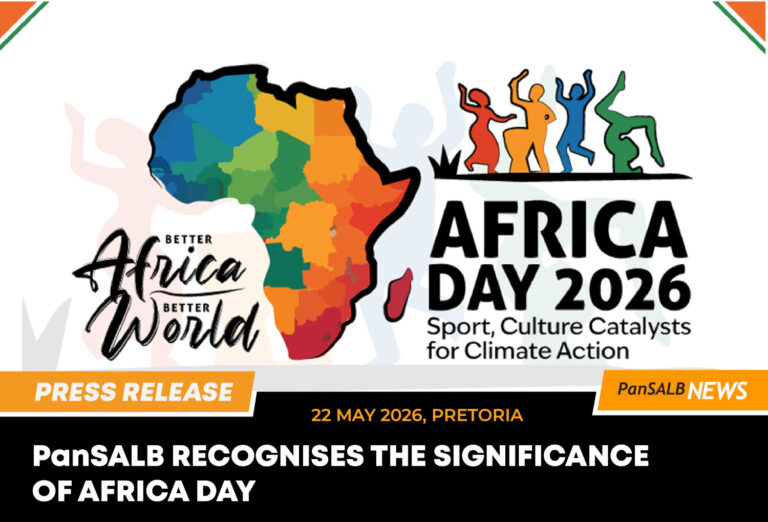
The Pan South African Language Board (PanSALB) joins the rest of the continent in observing Africa Day (25 May). Africa Day is observed annually during Africa Month (May) in recognition of the establishment of the Organisation of African Unity on 25 May 1963, later renamed the African Union. This commemoration seeks to highlight progress that Africa has made while reflecting on the common challenges that the continent faces in the global environment.
This year’s commemoration will be observed under the theme “Assuring sustainable water availability and safe sanitation system to achieve the goals of Agenda 2063”. The theme underscores the importance of sustainable development, inclusive growth, and collective action in advancing the aspirations of the African continent.
As a constitutional body mandated with promoting, protecting and creating conditions for the development of all official languages, including Khoi & San languages, PanSALB wishes to highlight the ongoing challenges facing African indigenous languages across the continent. According to the United Nations (UN), of 7,000 indigenous languages spoken in the world today, four in 10 are in danger of disappearing. In a bid to address this, the UN declared the International Decade of Indigenous Languages (2022-2032) to draw attention to the plight of indigenous languages and to mobilise stakeholders and resources for their revitalisation, preservation and promotion.
The preservation of African indigenous languages requires multisectoral interventions for sustainable development. The basic education sector in the country is currently seized with the implementation of Mother Tongue Based Bilingual Education (MTbBE) which must be adequately resourced for its effective implementation. The adoption and implementation of the Language Policy Framework for Public Higher Education Institutions by universities is equally as important to drive meaningful transformation and the decolonisation of our entire education system. It is also important to highlight the critical role that the government and the media play in ensuring that citizens have access to information and can participate in public life using their own languages.
PanSALB therefore calls upon governments, organisations and communities across the African continent to intensify collaborative efforts aimed at addressing the persistent inequalities and underdevelopment affecting indigenous African languages. Sustainable partnerships and innovative interventions remain essential in ensuring the continued growth, meaningful inclusion, and intergenerational transmission of indigenous African languages.
ABOUT PanSALB
The Pan South African Language Board (PanSALB) is a constitutional body mandated to create conditions for the recognition, implementation and furtherance of multilingualism in the Republic of South Africa, and the development of previously marginalized languages.